Velokurier
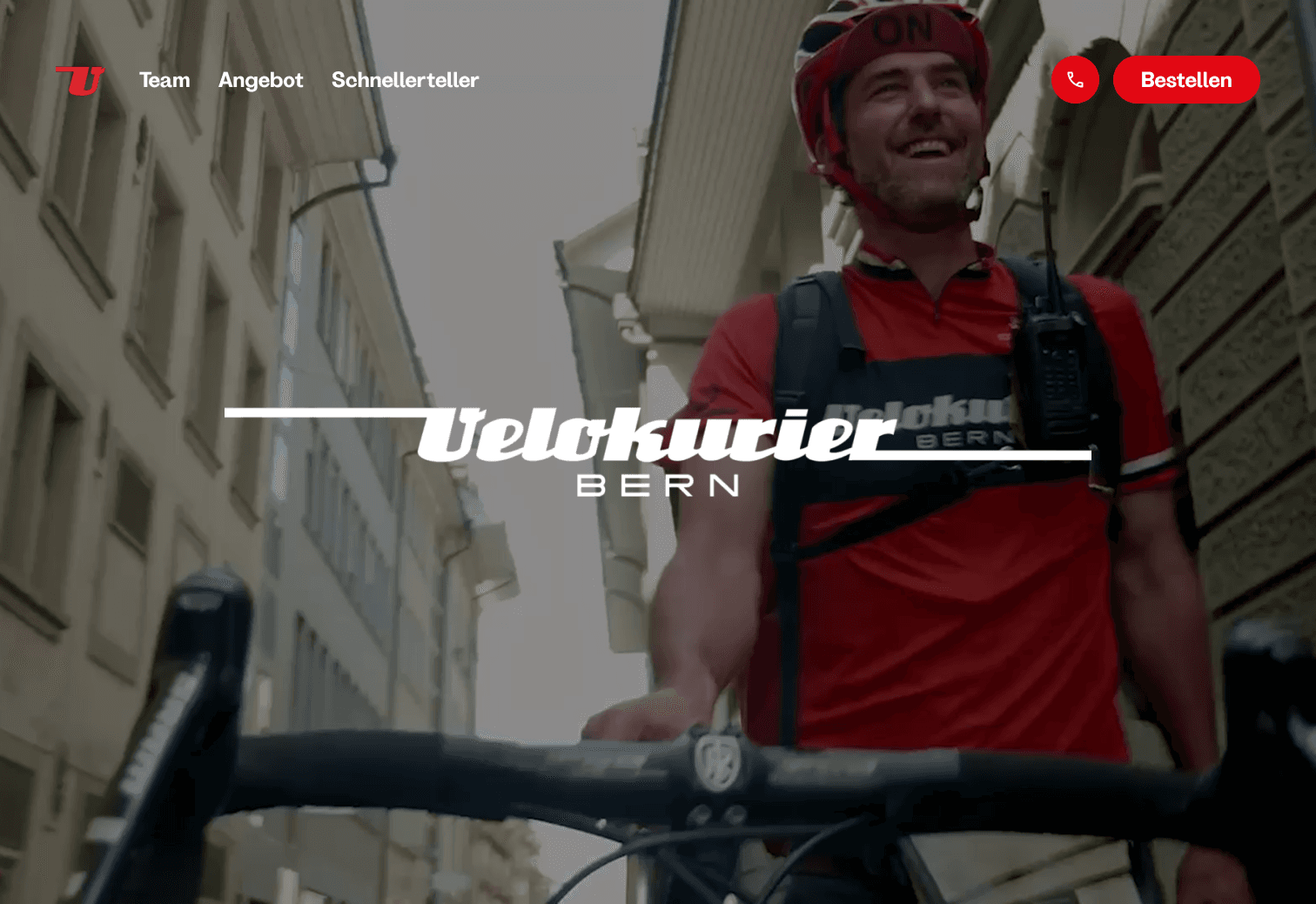
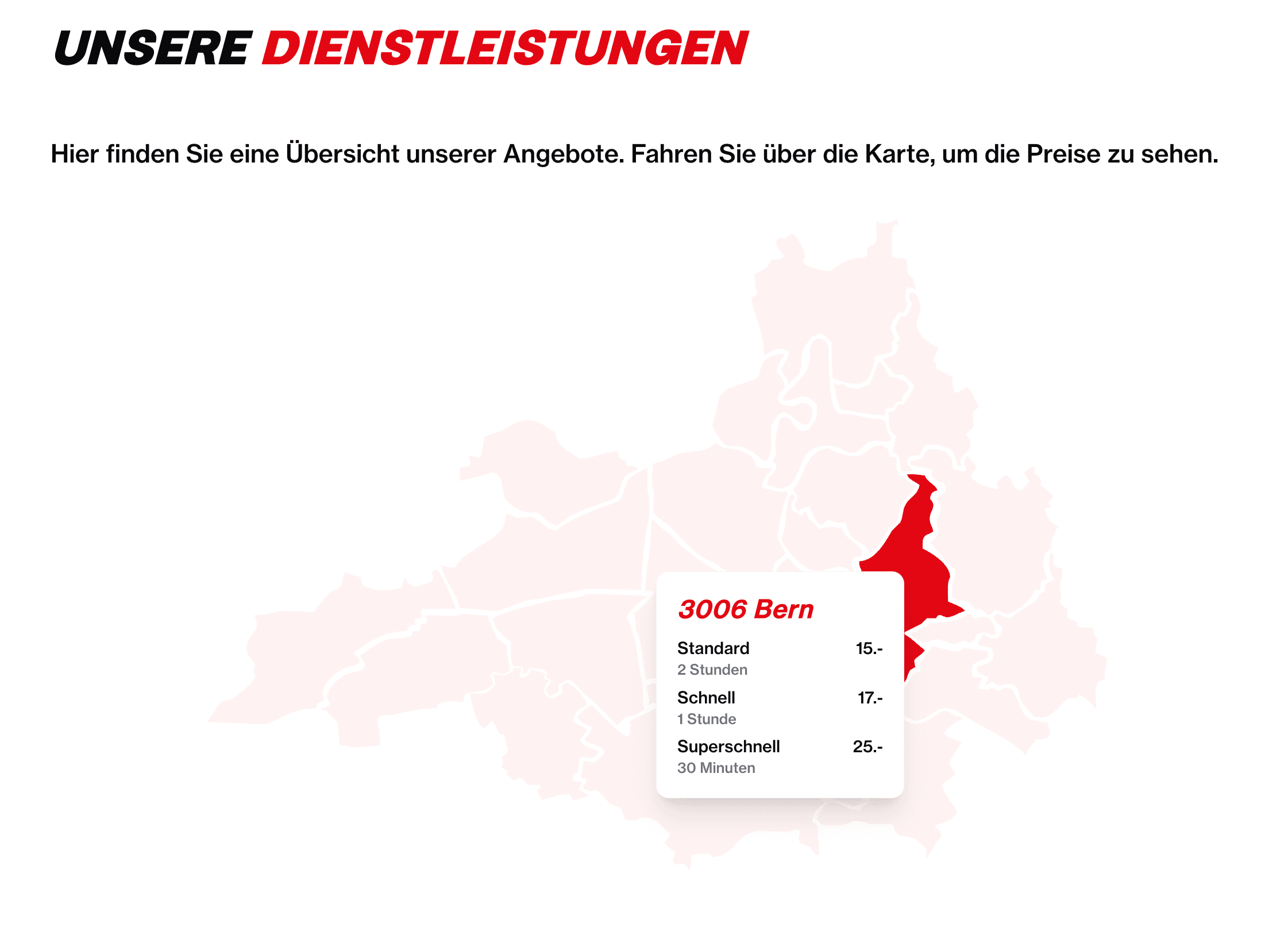
Velokurier Bern has been Bern's institute for ecological, fast urban courier services for over 35 years. The existing website had served its time – now it was time for a fresh appearance that does justice to the energy and attitude of the company. Our mandate: to rethink the digital presence from the ground up. From the first wireframe to the finished design, we created a site that not only looks better, but is also more functional – clearer in navigation, faster in the ordering process, and more contemporary in its visual language. Throughout, it was important to us to preserve the identity of Velokurier Bern: approachable, locally rooted, sustainable.
BACKGROUND
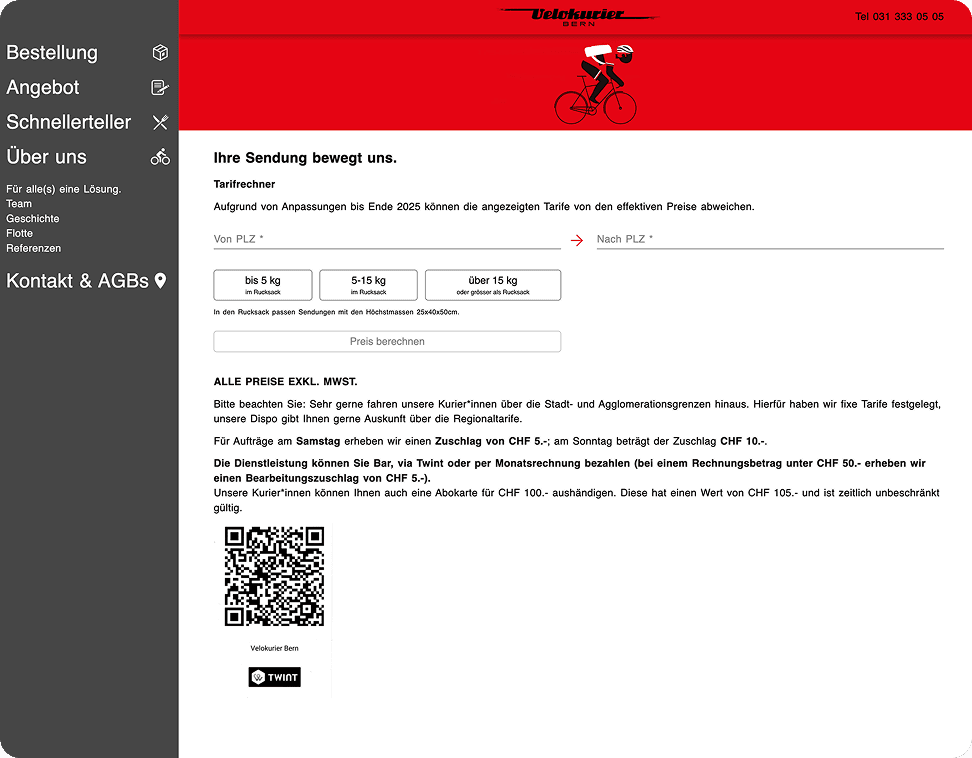
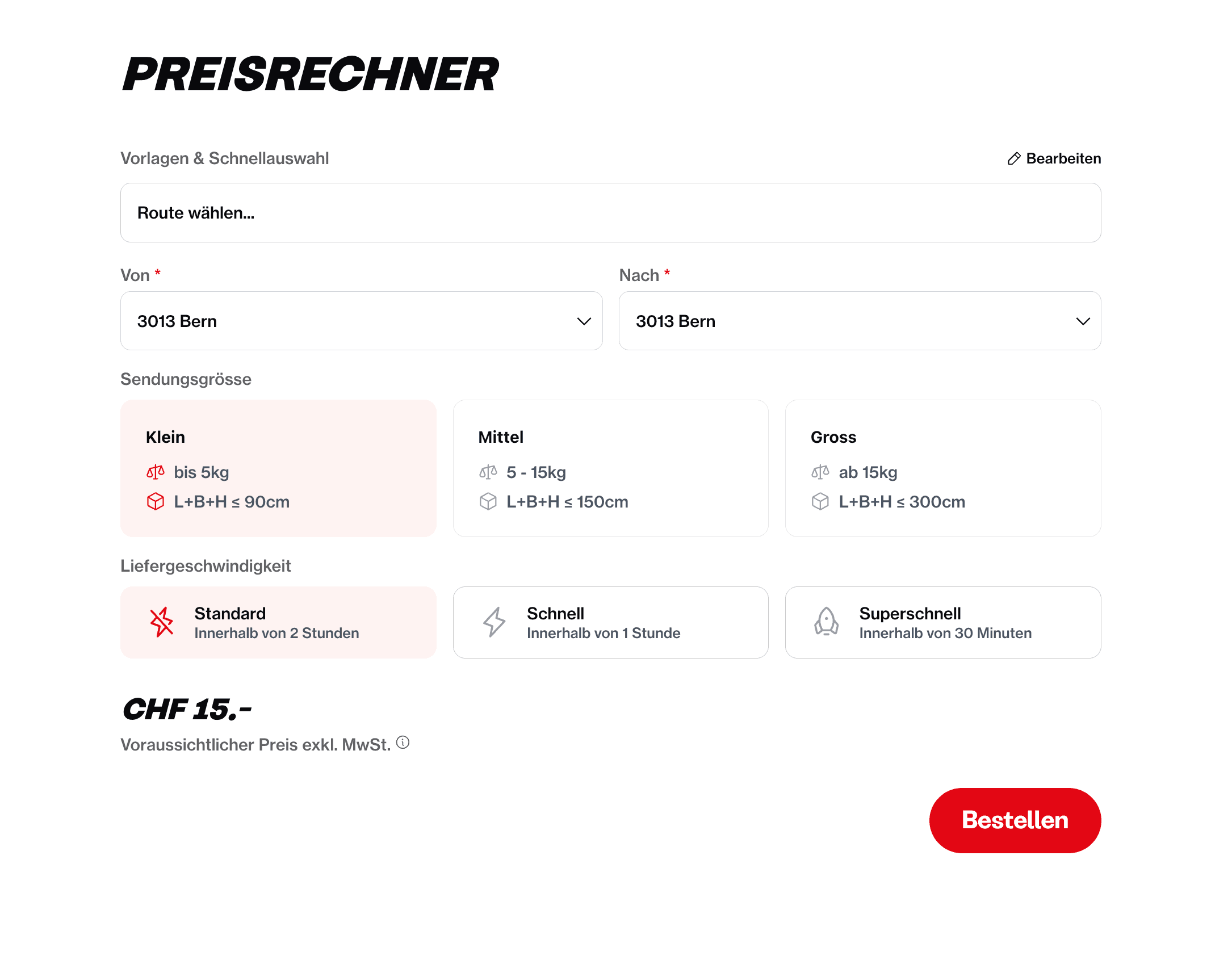
The existing website of Velokurier Bern had served its time – but it no longer reflected who the company is today. The design felt outdated and gave the brand no clear personality. The fare calculator, arguably the most important element of the site, was hard to find and cumbersome to use. Dropdowns instead of clear selection options, no immediate feedback, no logical thread through the ordering process. On top of that: anyone who spontaneously needs a courier on the go reaches for their phone – the old site was barely built for that.
RESULT
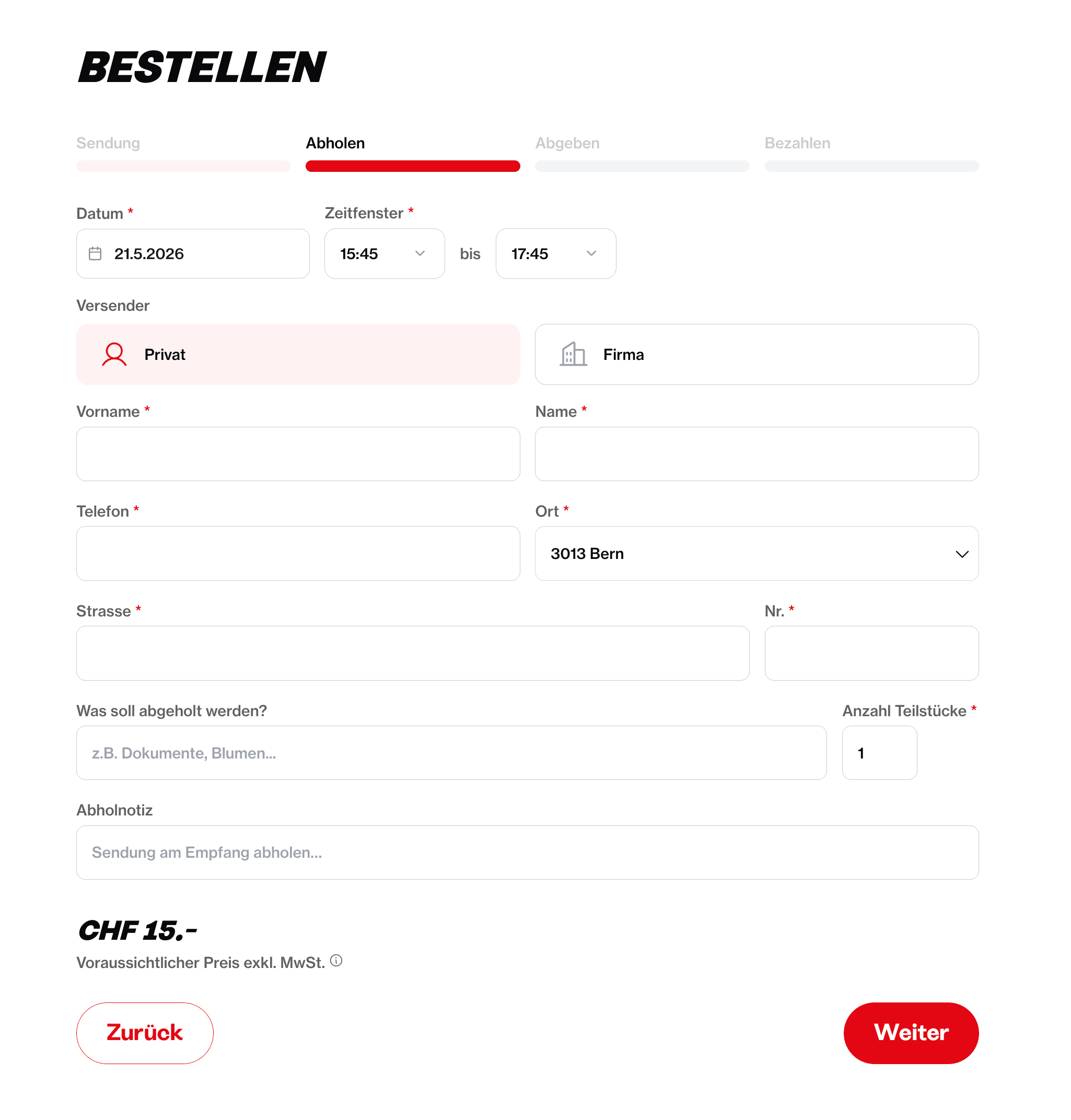
Velokurier Bern has been Bern's institute for ecological, fast urban courier services for over 35 years. The existing website had served its time – now it was time for a fresh appearance that does justice to the energy and attitude of the company. Our mandate: to rethink the digital presence from the ground up. From the first wireframe to the finished design, we created a site that not only looks better, but is also more functional – clearer in navigation, faster in the ordering process, and more contemporary in its visual language. Throughout, it was important to us to preserve the identity of Velokurier Bern: approachable, locally rooted, sustainable.
Slalomkomitee
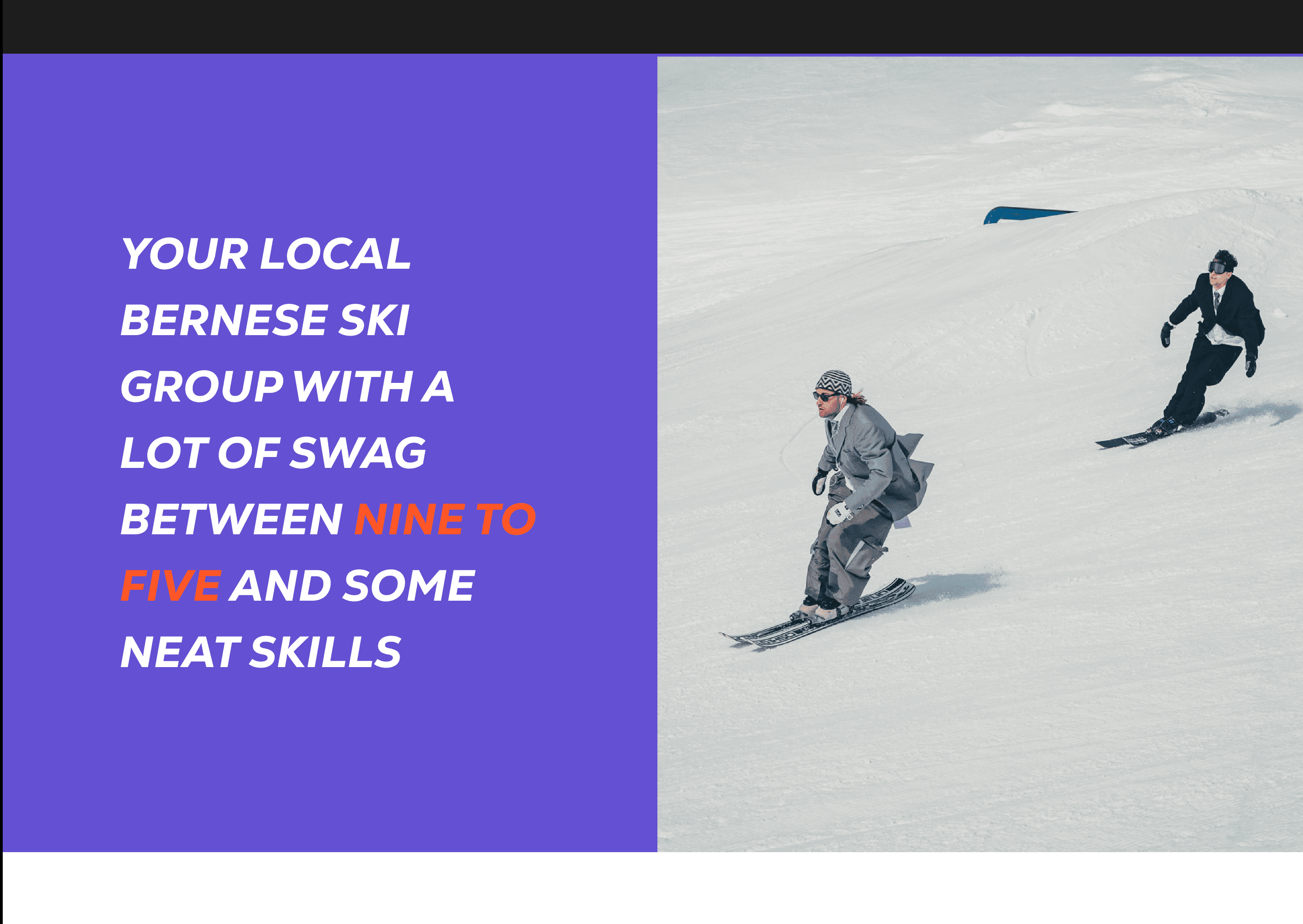
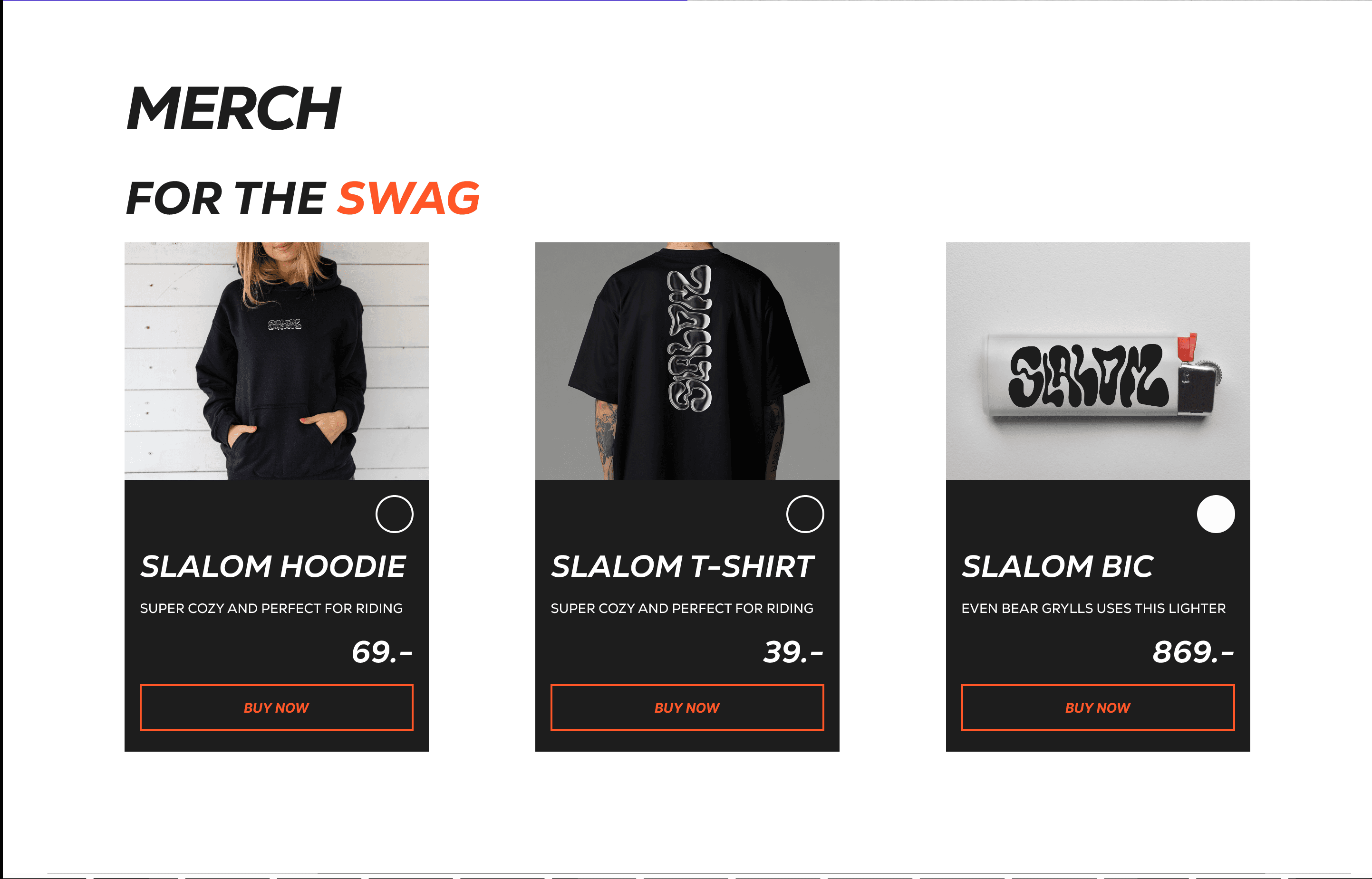
The Slalomkomitee website was designed as a modern and visually strong platform for a young ski and freestyle community. The main goal of the project was to capture the lifestyle and identity of the crew while also presenting their merchandise in a clean and appealing way. Strong visual communication played a central role throughout the design process. Large action shots, animated scrolling elements, and bold typography create an energetic and emotional user experience. The black-and-white color palette combined with orange accent colors reinforces the sporty and youthful appearance of the brand. Besides the visual concept, performance and responsiveness were also important aspects of the project. The website was optimized for different screen sizes to ensure a smooth experience on both desktop and mobile devices while maintaining a clear and modern layout.
BACKGROUND
At the beginning of the project, the main challenge was to create a website that felt modern, playful, and professional at the same time. The platform needed to reflect the identity of a young winter sports crew without becoming visually overwhelming or difficult to navigate. Since many visitors would likely access the website on mobile devices, responsive design became a major focus during development. Several technical issues appeared while building the layout, especially within the grid system and reusable card components. Fixed widths caused elements to overlap or collapse on smaller screens. Large spacing values also created layout problems on mobile devices. In addition, interactive sections containing videos, overlays, and buttons required careful adjustments to function properly across all screen sizes and maintain a clean user experience.


RESULT
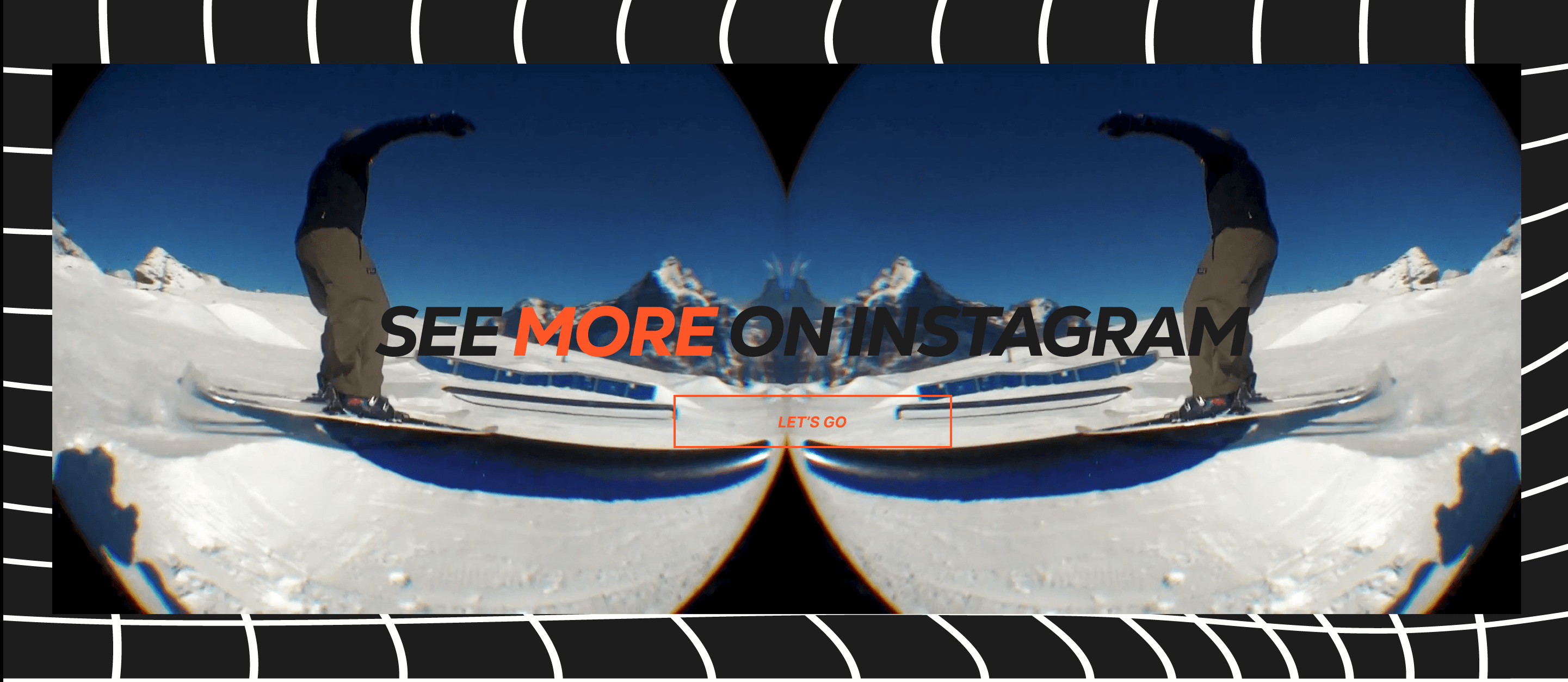
The final result is a modern portfolio and merchandise website with a strong visual identity and a clear focus on storytelling through design. Different sections such as the hero area, merchandise showcase, Instagram teaser, and team presentation work together to create a cohesive and engaging experience. By using Vue 3 and Tailwind CSS, reusable UI components were developed to ensure consistent styling and easier scalability for future updates. The responsive layout performs reliably across desktop and mobile devices, providing a smooth and intuitive browsing experience. Dynamic elements like scrolling text and video overlays add movement and energy to the interface while keeping the structure organized and easy to navigate. Overall, the website successfully combines an expressive image-based presentation with a functional and modern merchandising platform.
Edu
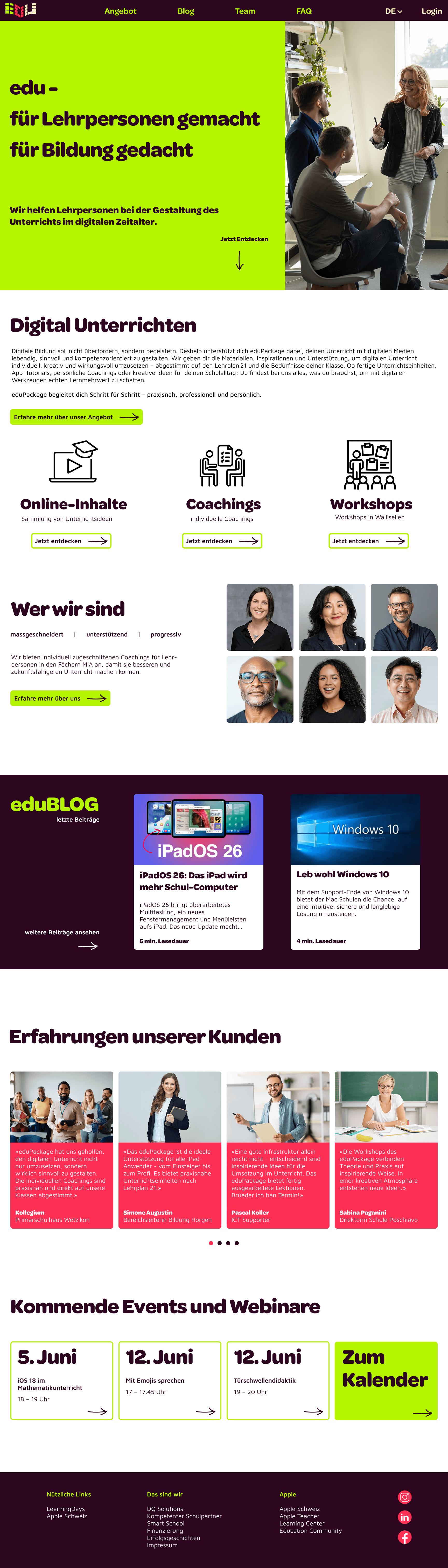
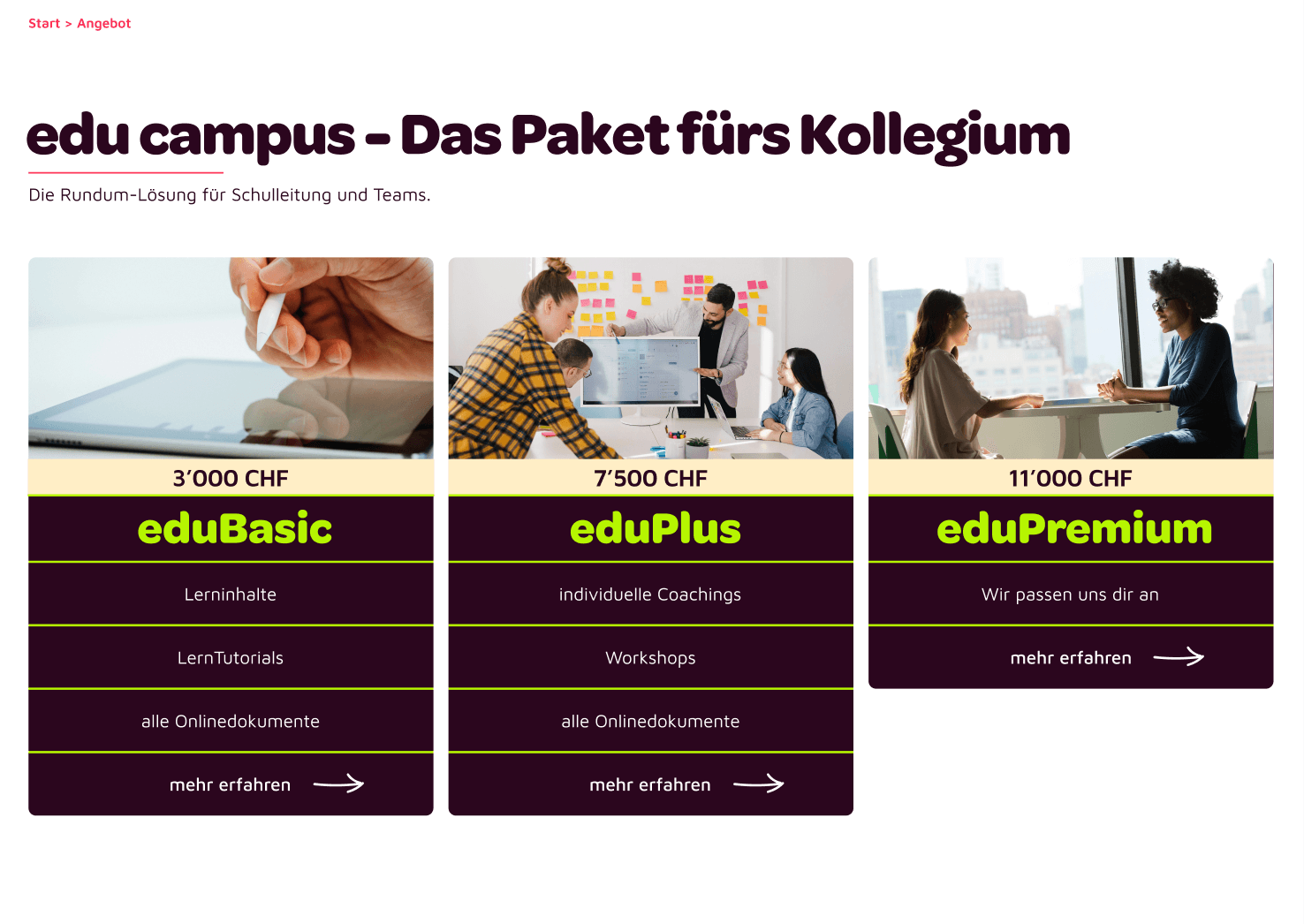
As part of a five-day Design Sprint, our team developed a new concept for the eduPackage platform by DQ Solutions. The goal of the project was to redesign the existing website both visually and structurally while communicating the platform’s value more clearly. We analyzed the current user experience, defined the brand values, and created a modern design system including typography, colors, and visual language. The project focused on how teachers and schools could be better reached and convinced of the benefits of digital learning solutions. Through workshops, research, and testing, we developed a user-centered prototype that strengthens the identity of eduPackage and makes the platform more accessible, intuitive, and engaging.
BACKGROUND
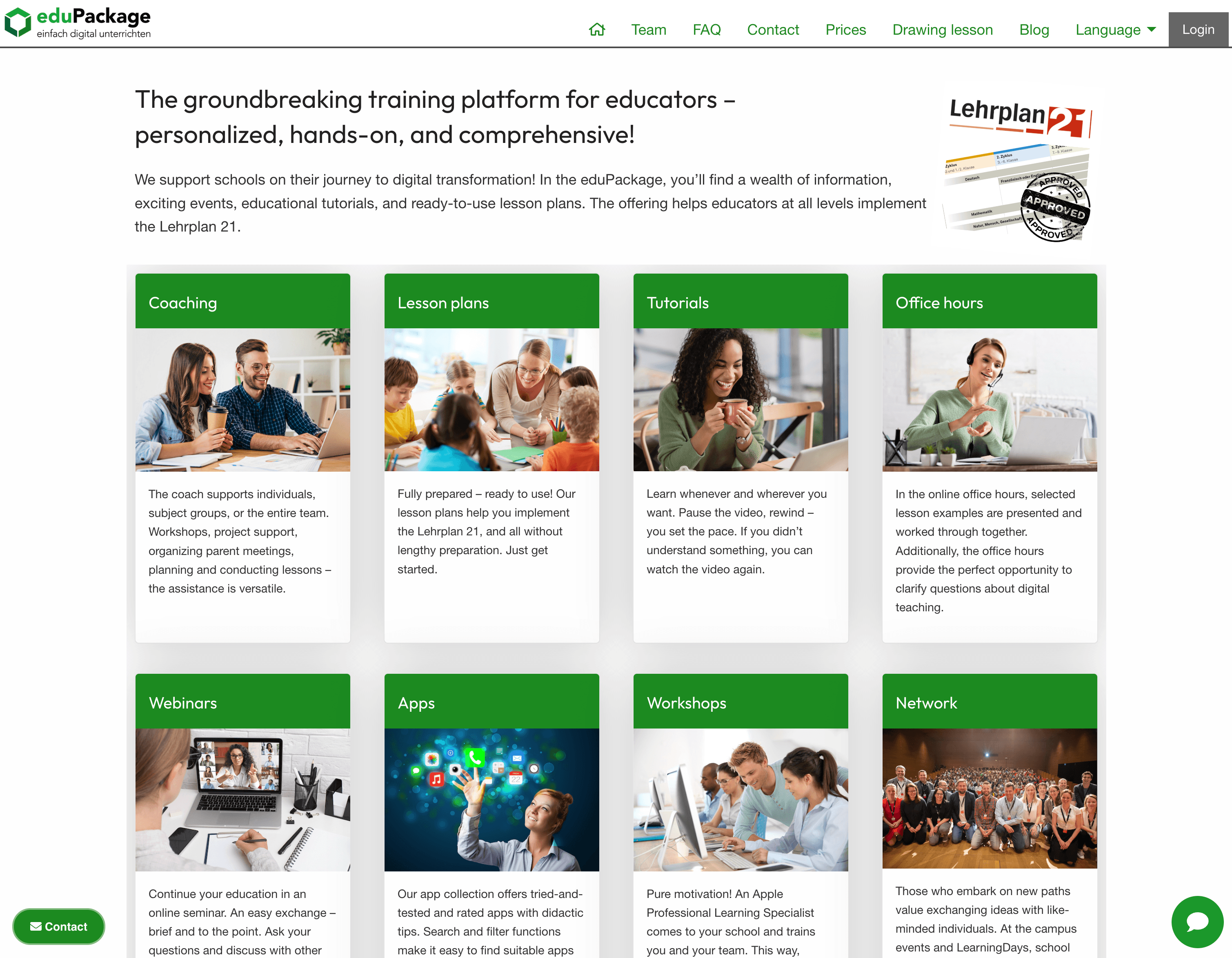
The existing eduPackage website did not communicate its content and services effectively. During the analysis phase, several issues became apparent: unclear call-to-actions, inconsistent visual design, and a confusing structure made navigation difficult for users. In addition, the platform’s unique selling proposition was not clearly visible, making it hard to differentiate eduPackage from other educational offers. The pricing structure also appeared confusing, and the services mainly targeted entire school teams rather than individual teachers. Interviews and research further revealed that schools are highly interested in digital education solutions but often lack the infrastructure, support, and guidance needed to successfully implement them in everyday teaching.
RESULT
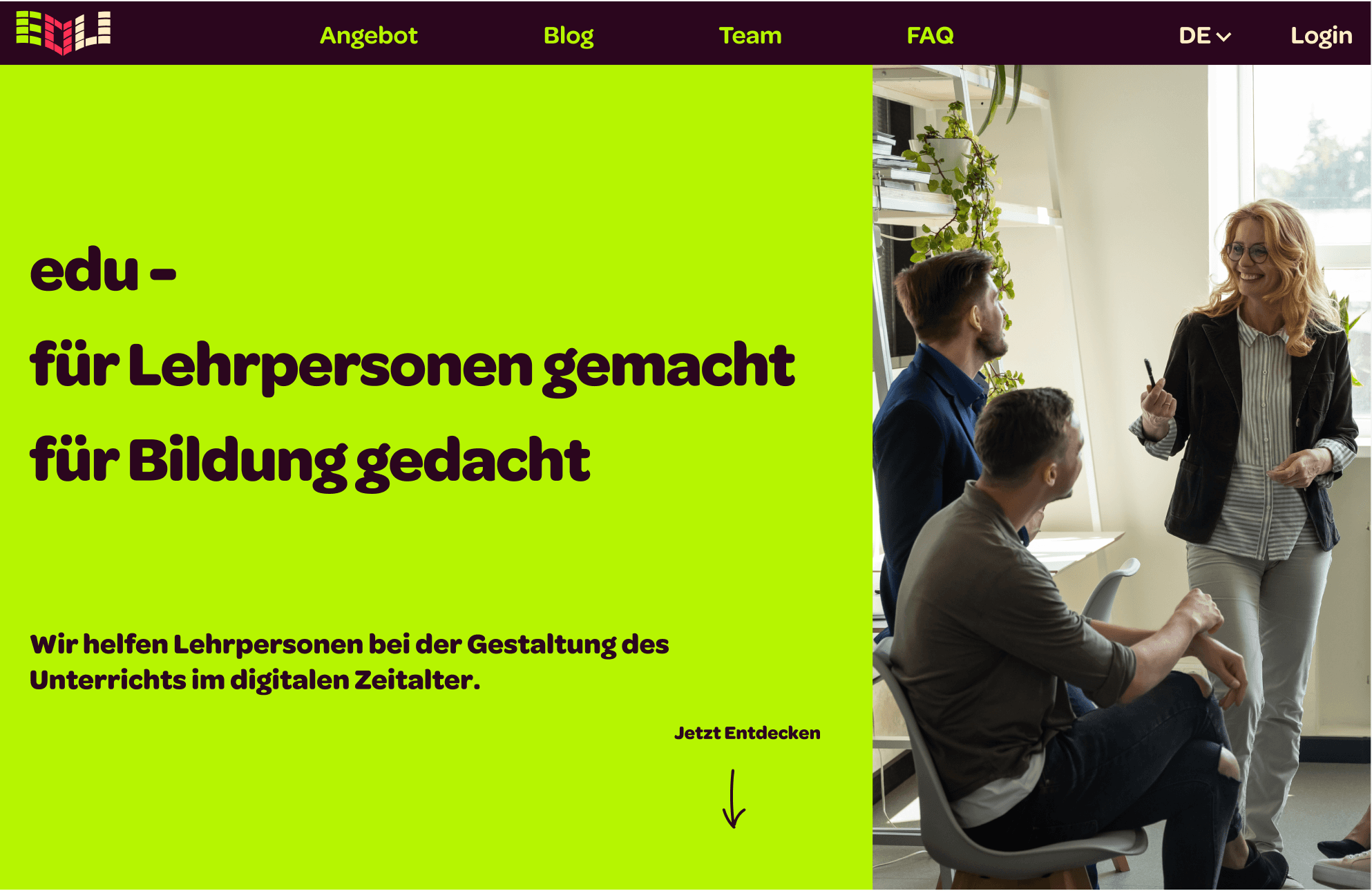
The final outcome was a comprehensive redesign concept with a clear brand identity and an improved user experience. Based on the core values “individual,” “supportive,” and “progressive,” we created a visual identity that feels modern, approachable, and purpose-driven. The new prototype communicates the benefits of eduPackage much more clearly and guides users intuitively through the platform’s services. A strong focus was placed on the individual support of teachers and on creating a more emotional connection through updated visual storytelling. In addition, we developed a style guide, restructured the service offerings, and formulated a clearer USP. Through hallway testing, early concepts were validated and refined, resulting in a cohesive and user-centered digital experience.

Pong
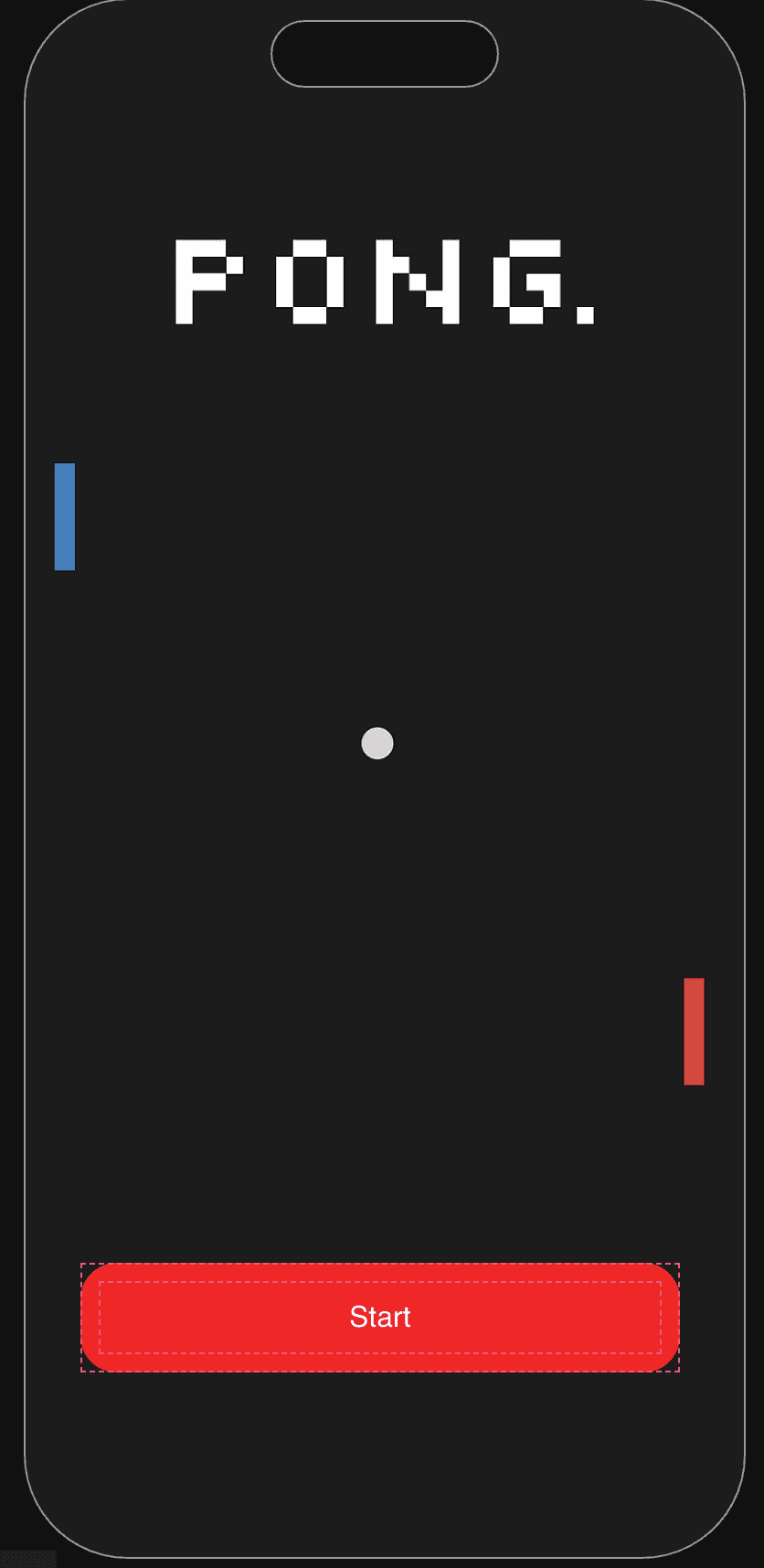
Pong is an interactive mobile prototype created in ProtoPie as part of the university module Interactivity. The goal of the project was to explore the creative and technical possibilities of mobile prototyping by developing a fully playable version of the classic game Pong. Instead of focusing on a traditional app concept, I wanted to experiment with game mechanics and interactive systems inside ProtoPie. The prototype includes different difficulty levels, a scoring system, collision detection, and a complete user flow from the home screen to the game-over screen. The project allowed me to combine playful interaction design with technical problem-solving while creating an engaging and functional user experience on a mobile device.
BACKGROUND
The assignment for the module focused on creating an “Interaction Journey” that demonstrates the possibilities of ProtoPie through experimentation and creativity. The challenge was not only to build a working prototype, but also to explore different interaction methods and combine them into a smooth and engaging experience. At the beginning of the project, I considered several alternative concepts, including a “Where’s Walter?” style game and a digital maze. However, these ideas were less suitable for testing dynamic interactions and continuous feedback systems. I eventually decided to create Pong because it provided the opportunity to work with more advanced features such as collision detection, variables, game states, and responsive interactions between user input and system behavior.
RESULT
The final result is a fully functional Pong prototype designed for mobile devices. The prototype successfully demonstrates different interactive features within ProtoPie, including collision detection, score tracking, multiple difficulty levels, and screen transitions. I focused on creating a minimalistic visual style to keep the attention on the gameplay and interactions. One of the strongest aspects of the project is the collision system, which creates a smooth and responsive gameplay experience. Additionally, haptic feedback through vibration enhances the interaction whenever the ball hits a paddle. Looking back at the project, I achieved the main goal of creating an engaging and technically functional prototype. In future iterations, I would improve the microinteractions and further refine the overall user journey to create a more polished experience.